 Meter Max
Find the box
Open the Home screen and look for the box called What to set aside for 2026-27 (the year changes each April).
If it says "Nothing to work out yet", you haven't added any takings for this tax year. Add some (see guide 3) and the estimate appears.
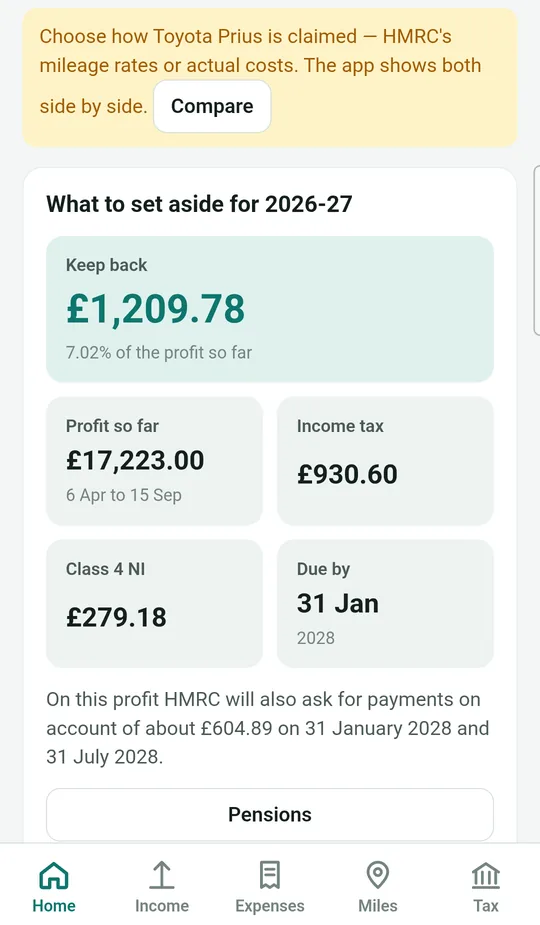
What each figure means
| Figure | What it means |
|---|---|
| Keep back | The most important number: the total to save for this year's tax so far. It also shows as a percentage of your profit, which is handy for working out how much to save each week. |
| Profit so far | Your takings minus your allowable expenses (including mileage). Tax is based on this, not on everything you earned. |
| Income tax | Tax on your profit, after your tax-free Personal Allowance. |
| Class 4 NI | National Insurance that self-employed people pay on profits. |
| Student loan | Only shown if you told the app you have a student loan. |
| Due by | When the tax has to be paid to HMRC, usually 31 January after the tax year ends. |
It's an estimate
The figure assumes you have no other income, such as a part-time job, unless you've added it under Tax › Tax year. HMRC's own calculation is what you actually owe.
A simple saving habit
-
Open a separate savings account
Most banks let you open a free savings "pot" in their app. Call it "Tax".
-
Once a week, check Keep back
After adding your week's takings and expenses, look at the Keep back figure on the Home screen.
-
Top up your tax pot to match
If Keep back says £1,200 and your pot has £1,000, move £200 across. When the bill comes, the money is waiting.
Your full tax year
For more detail, tap Tax at the bottom, then Tax year. There you can:
- see step by step how your profit turns into tax (From profit to tax);
- add other income, like pay from a job, savings interest or dividends, so the estimate is more accurate;
- add pension payments, which can reduce your tax;
- see whether HMRC may ask for payments on account, which are advance payments towards next year's bill.
Keeping it accurate
- Add all your takings, including cash jobs and tips.
- Add every business expense and your business miles. They lower your profit, and your tax.
- Check your details in Settings, especially Where you live (Scotland has different rates) and Student loan.